


Επιστροφή


 Upper Limb
De Quervain tendonitis, or de Quervain tendinitis is an inflammation of the tendons of the first dorsal compartment in the wrist area. The main cause of inflammation is excessive use of the thumb.
The main symptom is pain located in the wrist, in the extension of the thumb. The approach at first is conservative. If the symptoms persist, surgery is indicated.
Everything at OSTEON


Swiss surgeon Fritz de Quervain was the first to describe inflammation of the tendons of the first dorsal compartment of the wrist in 1895. The exact scientific term is specifically, stenotic tendinitis de Quervain. However, the disease is briefly known as, “de Quervain’s tendonitis”.
Within this relatively narrow space are two tendons, responsible for the movement of the thumb. It is the short extensor and the long abductor of the thumb.
Under normal conditions, the tendons move without problem and perform their function. However, in case of excessive use or acute injury, swelling and inflammation in the area are caused. As a result, the tendons are pressed and their normal movement is hindered.
De Quervain’s tendonitis is also known as the “housewife’s thumb” because women are affected about 8 times more often than men. The usual age of inoculation is after the age of 40.
Pain in the extension of the thumb in the wrist area is the characteristic symptom of de Quervain‘s tendonitis. It gets worse when trying to hold objects or rotating movements.
In the outbreak of the disease, when the inflammation is intense, every simple movement of the thumb is painful and the patient is unable to perform even simple daily activities.
In advanced stages of de Quervain tendonitis, tendons may become blocked during movement or even be completely immobile due to swelling. If left untreated, symptoms can last weeks or even months. They usually occur after a period of excessive use of the thumb.
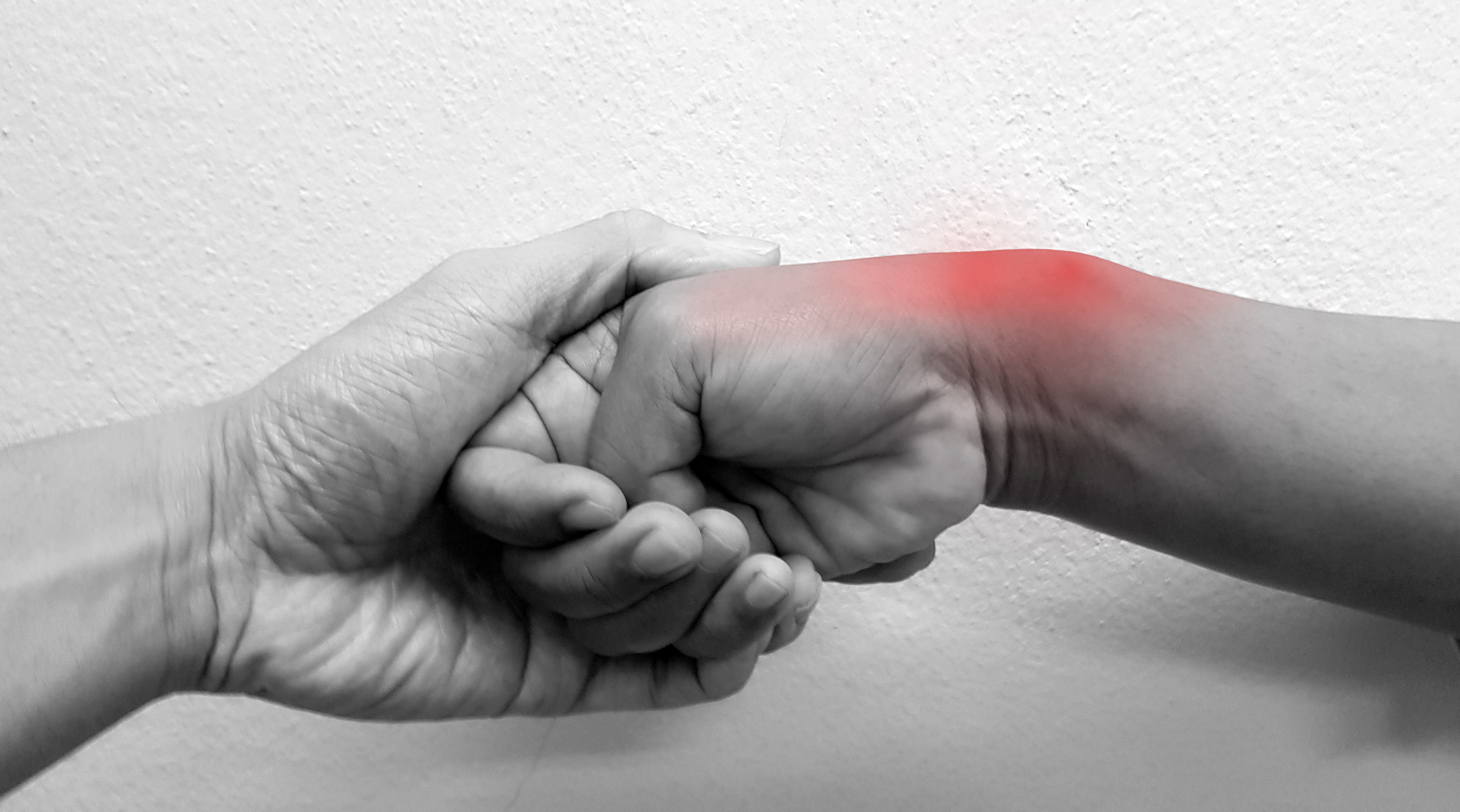
The cause of tendonitis is the overuse of the thumb with extending, bending and twisting movements. A classic example is young mothers, who hold their baby for long hours and the two tendons are constantly under pressure, causing inflammation and swelling. De Quervain‘s tendonitis is also more common in almost all manual professions and in nurses. In many cases, of course, the exact cause cannot be determined.
For the diagnosis of de Quervain tendonitis, it is usually sufficient to take the correct history and a detailed clinical examination. The pain reproduces very easily with the pressure just above the tendons in the wrist, while there may also be obvious swelling in the area, due to edema.
In addition, there is a typical test (Finkelstein-Test) in which the thumb is pressed towards the palm. If severe pain is released, then de Quervain’s tendonitis is almost certain.
Radiological examination for de Quervain tendonitis is usually not necessary. Only in the case, when there is a need to exclude other causes for the origin of the pain, imaging examination with X-ray or MRI is required.
De Quervain’s tendonitis is initially treated conservatively. In the early stages where the symptoms are not so intense, rest, avoidance of activities that aggravate the problem and short administration of anti-inflammatory drugs are recommended.
It is even useful to place a thumb immobilizer splint. The topical use of cortisone in de Quervain’s tendonitis should be done with special care and only by orthopedic specialists, since the risk of injury to the nerve located in the area, is high.
When the symptoms persist, then surgical treatment of the problem is necessary. The operation is performed under local anesthesia and requires a small incision (2cm) just above the tendons in the wrist area. The patient is discharged from the hospital on the same day, can move his arm immediately and in 2 weeks he returns to his normal activities. If the surgery is performed by a specialized orthopedic surgeon of the upper limb, tendonitis does not recur.
If you are experiencing any pain or discomfort, please do not hesitate to contact us.