


Επιστροφή


 Foot and Ankle
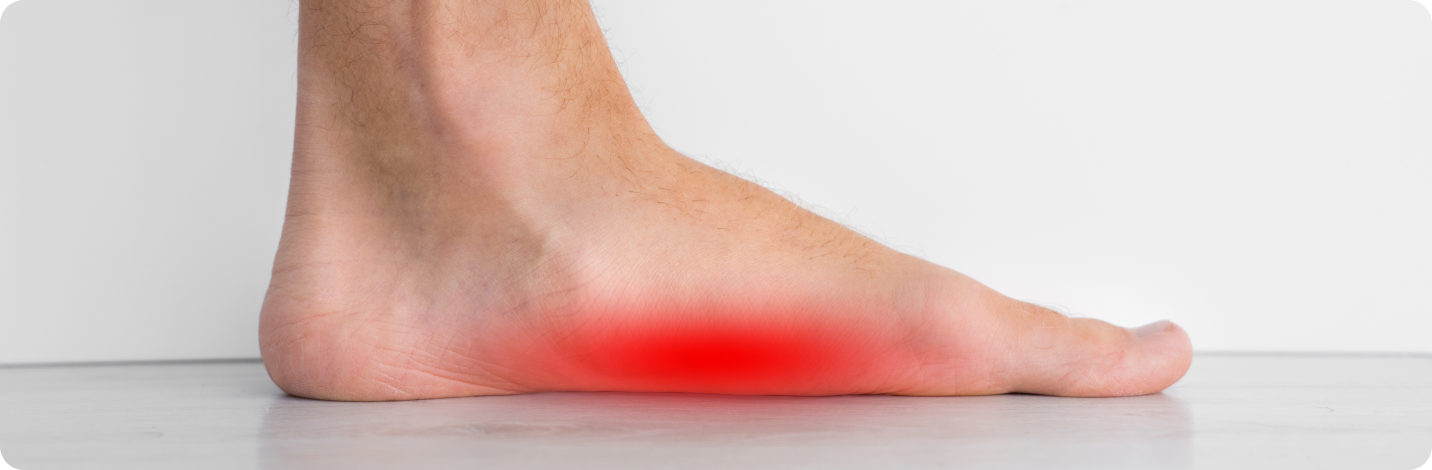
Acquired flat feet, also known as Progressive Collapsing Foot Deformity (PCFD), is a condition that tends to affect women beyond middle age. Most affected patients complain of pain in the foot and notice a flattening of the arch of the foot with flatfoot formation that they did not have at a young age (“acquired” flat feet). Management of the condition varies depending on the patient’s symptoms and the degree of dysfunction.
The posterior tibial tendon is a tendon that runs along the posterior surface of the tibia, runs along the back of the medial hammer (the bony lump on the inner side of the ankle joint), and ends on the inner and lower surface of the foot at the top of the arch of the foot. This tendon is responsible for preventing the collapse of the normal arch of the arch of the foot. It also helps keep the ankle and hind leg in good alignment. Thus, this tendon remains constantly active and plays a key role in the proper functioning and alignment of the foot and ankle.
Over time, the posterior tibial tendon can degenerate. In its milder form, this wear can cause pain on the inside of the leg and ankle, as well as, some swelling. However, as the degeneration progresses and the tendon stretches or undergoes minor ruptures, deformities appear in the foot: the arch of the foot begins to fall, the ankle and hind leg begin to tilt inwards, and the toes appear to point outwards. While these changes in foot alignment initially start as flexible deformities, over time arthritic changes develop in the affected joints and eventually lead to stiff deformities/ankylosis. Finally, in its most severe form, these arthritic lesions also affect the ankle joint.
Everything at OSTEON


The treatment of acquired flat feet in all cases, begins with conservative means that include analgesics and local anti-inflammatory gels, modification of daily life by avoiding activities that aggravate the symptoms and the use of appropriate footwear, such as sneakers or boots. Orthotics also play an important role in the management of progressive foot subsidence. Orthotics typically include an insole with a mid-arch support and a heel wedge to help tilt the hind foot. While initially these insoles can help correct a flexible deformity, in more advanced cases they simply help to receive and relieve stiff deformities. It is also important to consider the role of increased body weight and the forces exerted daily on the foot, as obesity is a risk factor for acquired flat feet.
Surgery is indicated for patients who cannot control their symptoms with conservative measures. For mild forms of the condition, cleaning / removing the tendon sheath called a sheath (elytron) and restoring any small tears is applied. At the stage when the deformities in the leg progress, surgery aims to correct them. This usually involves a combination of bone interventions and operations on so-called soft tissues, including tendon transfers. When the deformities are rigid and have led to arthritis, they are usually treated by joining the affected joints with arthrodesis.
Postoperative recovery depends on the type of operation performed. Thus, more limited interventions with cleanings have a shorter recovery time, while realignment surgeries with osteotomies and articulations may require a few weeks of full discharge with the foot in plaster. Your surgeon will monitor you clinically and ask for X-rays to ensure that bone surgeries heal smoothly. Physical therapy will often be needed to regain muscle strength and range of motion. It is also recommended to then, wear suitable shoes, with an integrated arch support or use insoles, that support the arch of the foot.
If you are experiencing any pain or discomfort, please do not hesitate to contact us.